
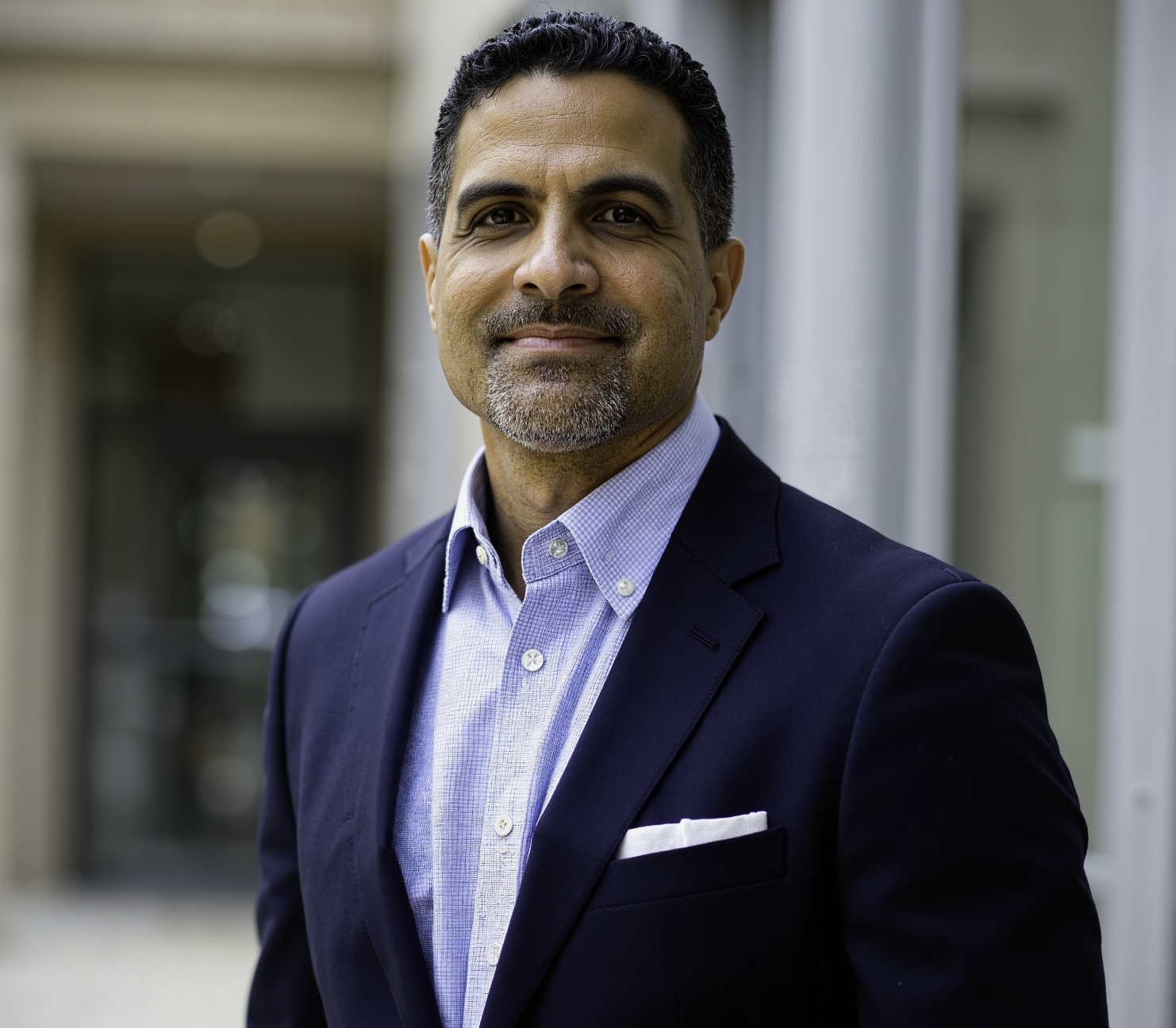
Veteran law enforcement leader Joshua Wallace has a theory about why officers struggle. It is not usually the job itself that breaks them.
“Officers rarely struggle because of a lack of skill,” says Wallace, a commander with the Chicago Police Department’s Criminal Networks Group. “They struggle because of pressure, isolation, or the belief that they have to carry everything alone. I’ve been in those places.”
That admission, offered plainly and without self-pity, tells you how Wallace operates. In a profession that still rewards stoicism over self-awareness, he has built a 25-year career in the Chicago Police Department by doing something relatively rare: being honest about the hard parts.
Wallace came up through the ranks the traditional way. He started in the field, worked narcotics and tactical operations, commanded drug investigations, and eventually returned to the unit where he had once worked as a street-level officer. The return was intentional. Today, he leads it.
The Criminal Networks Group sits within CPD’s Counterterrorism Bureau, and its mandate is to disrupt the networks that fuel street violence, trafficking pipelines, criminal financing, and multi-jurisdictional crews that move between drug sales, weapons, and increasingly, retail theft and fraud.
It is consequential, high-pressure work. But Wallace argues it is fundamentally about people, the people doing the work as much as the targets of it.
His approach to mentoring reflects a philosophy earned through experience rather than theory. When he evaluates emerging leaders, he is not primarily looking for tactical instinct. He looks for “honesty, transparency, a genuine willingness to learn, selflessness, and compassion.” Those qualities, he says, reveal themselves not in routine moments but in uncomfortable ones.
“I develop leaders by assigning responsibility before they feel ready,” he said, “then guide them through the discomfort that growth requires.”
That method requires a supervisor willing to stay close without hovering, a distinction Wallace spends real time thinking about. He describes being present during a subordinate’s first major incident but ensuring the sergeant owns the decision. The debrief afterward, he says, matters as much as the event itself. The goal is not to hand down his framework, but to help others build their own.
“What kills confidence faster than anything,” he said, “is leaders who support their people in the moment but abandon them when criticism comes.”
Wallace graduated from the FBI National Academy and the Senior Management Institute for Police, credentials that reflect a sustained investment in leadership development over a career that has not always been linear. He has been a finalist for chief of police positions in multiple cities. He has also navigated personal challenges, experiences he says deepened his empathy and broadened his understanding of what people carry outside the uniform.
“Adversity doesn’t disqualify leadership,” he said. “It refines it.”
The Small Signs That Tell You Something’s Going Wrong
Mentoring is the visible side of leadership. But the harder part of the job, Commander Wallace says, is knowing when something isn’t right and stepping in before small problems turn into real ones.
Over the years, he has learned to watch for subtle shifts inside specialized units like narcotics, gang investigations, and vice. The warning signs are rarely dramatic at first. They show up in paperwork that starts to look rushed or repetitive. Reports sound more like templates than real accounts of what happened. The same confidential source appears again and again without being fully vetted.
“When you see copy-paste language across multiple cases,” Wallace says, “that’s not efficiency. That’s manufacturing probable cause.”
In other words, when shortcuts start to replace careful work, the integrity of the case, and the unit, is at risk.
Wallace believes accountability has to happen long before misconduct ever becomes an investigation. He draws a clear line between what he calls punitive accountability and developmental accountability. One reacts after something goes wrong. The other prevents problems by setting clear expectations and correcting small mistakes early.
“When a supervisor reviews a report that’s below standard and sends it back for correction, that’s not being nitpicky or bureaucratic,” he says. “That’s maintaining the boundary between acceptable and unacceptable.”
That mindset matters even more in Chicago, where the police department has operated under a consent decree since 2019. The agreement followed a Justice Department investigation that found patterns of unconstitutional stops, excessive force, and discriminatory policing, and it created stricter oversight and documentation requirements across the department.
Wallace sees those requirements not as a burden but as structure.
“The requirements offer structure that reduces some uncertainty,” he says. “New supervisors know that if they follow constitutional policing principles, document thoroughly, and prioritize legitimacy, they’re on solid ground even in ambiguous situations.”
Commander Joshua Wallace: “You Can’t Cut the Head Off a Hydra”
The job Wallace does now sits at the center of one of the biggest shifts in modern policing. The old playbook, built around taking down clear leaders and working cases up the chain, does not always apply anymore.
Criminal groups, he says, do not look the way they used to.
“Traditional investigations often worked up the ladder,” Wallace says. “You arrested someone at the street level, flipped them, and worked toward the head of the organization. Decentralized networks don’t have a clear apex, so investigations have to begin with mapping the whole ecosystem.”
That shift changes how cases are built. Instead of targeting a single leader, investigators are trying to understand moving networks, people connected by money, technology, and opportunity rather than loyalty or hierarchy.
“You can’t cut the head off a hydra,” Wallace says. “What looks like a narcotics crew today is running vehicle thefts tomorrow and retail crime the next day.”
The work becomes less about a single takedown and more about disruption, identifying the people who move money, the facilitators who keep operations running, and the digital tools that allow groups to coordinate. Success is measured over months and years, not just at the end of an operation.
Arrest numbers alone rarely tell the full story. The more important question, he says, is whether a network’s ability to operate has been meaningfully reduced and whether the intelligence gathered helps prevent future violence.
“When one investigation leads to the next,” Wallace says, “that’s success.”
Wallace: ‘My Path Has Been Shaped By People Who Showed Me What Real Leadership Looks Like’
Spend enough time around policing, Wallace says, and you begin to notice burnout does not look the same at every stage of a career.
He talks about it plainly, without drama.
New officers are often overwhelmed by exposure to trauma. Veterans hit a different wall, a quieter one built from accumulated cynicism and what Wallace calls the moral weight of watching the same problems cycle through a system that cannot solve all of them.
“Officers join to help people, make communities safer, and do meaningful work,” he says. “Then they discover the limitations.”
That realization can reshape how officers see both the job and themselves. Wallace argues that when leaders refuse to acknowledge those limits, they unintentionally push officers to internalize systemic failures as personal inadequacy. Naming what policing can and cannot solve, he says, is not defeatist, it is necessary.
He has seen what happens when that conversation never happens. Officers withdraw. Cynicism hardens. Purpose fades into routine.
His approach to prevention is grounded in practical leadership. He focuses on reducing unnecessary bureaucratic friction, rotating assignments before the emotional toll accumulates, normalizing reasonable work-life boundaries instead of glorifying constant availability, and recognizing sustained excellence in veteran officers who are often overlooked precisely because they perform so consistently.
There is also something less tangible but just as important. Wallace emphasizes creating psychological safety inside high-pressure units, space for experienced officers to acknowledge when the weight of the work is catching up with them without being seen as weak in a culture that still prizes toughness.
“When officers believe accountability exists to help them improve rather than to catch them doing wrong, they engage with it differently,” he says. “They ask questions when uncertain. They flag potential problems before they become violations.”
That philosophy reflects a belief Wallace has returned to throughout his career: trust inside an organization is built the same way it is built outside of it, through consistency, honesty, and leaders willing to acknowledge the human cost of the work.
“My path has been shaped by people who showed me what real leadership looks like when the pressure is highest,” he says. “If anything endures, I want it to be that same standard carried forward by the next generation.”
