
In summary:
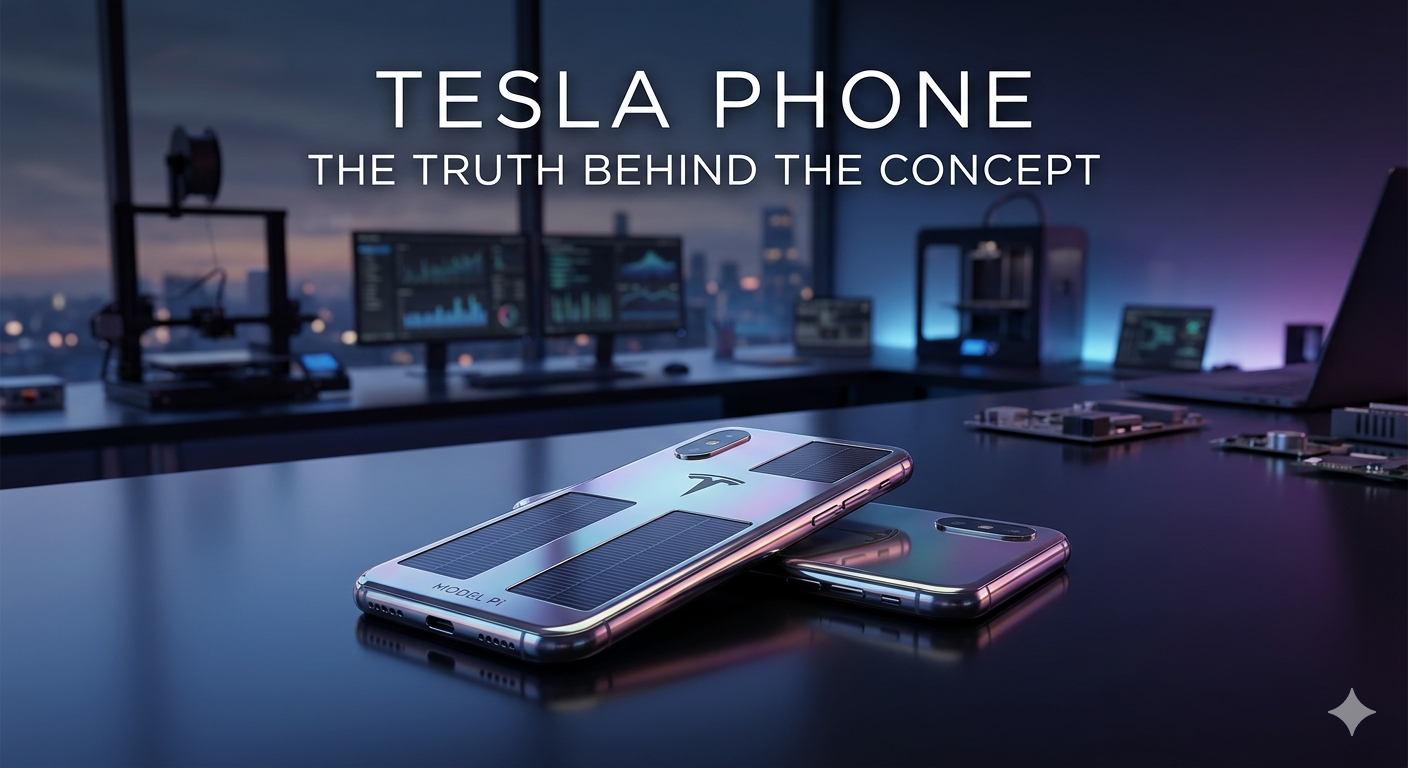
The Tesla phone, often referred to as the “Model Pi,” is a rumored smartphone that has captured the public’s imagination with claims of Starlink satellite connectivity, solar charging, and Neuralink integration. Despite viral social media posts and detailed renders, Tesla has not officially announced or released a handheld mobile device.
I have spent years tracking the intersection of automotive tech and consumer electronics, and few topics spark as much heated debate as the potential for a Tesla phone. Every few months, a new “leak” or a stunning 3D render goes viral, promising a device that will disrupt the duopoly held by Apple and Samsung. But as an expert who looks past the hype and into the actual supply chain and corporate strategy, I want to give you the ground truth.
While the “Model Pi” remains a speculative masterpiece of the internet, the underlying technologies—like direct-to-cell satellite communication—are very real. In this deep dive, we are going to separate the sci-fi fantasies from the actual engineering possibilities, looking at what a device from Elon Musk’s ecosystem would actually need to succeed.
Why the Tesla phone continues to dominate headlines
The obsession with a Tesla phone isn’t just about wanting another gadget; it is about the “Everything App” philosophy and the desire for a truly integrated ecosystem. Imagine a device that isn’t just a phone, but a master key for your car, a terminal for your Starlink internet, and a controller for your Powerwall.
Currently, our smartphones are the primary interface for our lives, yet they are controlled by two major gatekeepers: Google and Apple. Elon Musk has famously stated that he would only build a phone if it became a “mechanical necessity”—specifically if Apple and Google began “censoring” apps or acting as hostile gatekeepers.
Essential insights you will find in this article:
-
The Reality of the Rumors: We will look at what has actually been said by leadership versus what is “internet lore.”
-
The Tech Specs: A breakdown of the features a Tesla phone would likely carry if it ever hit the assembly line.
-
The Connectivity Revolution: How Starlink is already changing the game for mobile devices, even without a Tesla-branded handset.
-
Strategic Analysis: Why entering the smartphone market is a high-risk gamble that Tesla might not be ready to take just yet.
Rumored specifications: What would a Tesla phone look like?
If we look at the various concept designs and “leaks” that have circulated, the Tesla phone is often envisioned as a rugged yet sleek flagship. The most persistent rumors suggest a device that utilizes a photochromic coating—allowing the body to change color based on sunlight—and a triple-lens camera array optimized for astrophotography.
Below is a breakdown of the speculative specs that enthusiasts are betting on:
| Feature | Speculative Detail |
| Processor | Custom Tesla-designed Silicon (similar to FSD chips) |
| Connectivity | Native Starlink Direct-to-Cell + 5G |
| Charging | Integrated Solar Charging + High-Speed Wireless |
| Biometrics | Ultrasonic Fingerprint + Potential Neuralink Link |
| Body Material | Grade 5 Titanium or Stainless Steel (Cybertruck style) |
| Display | 6.7-inch LTPO OLED, 144Hz Refresh Rate |
The Starlink factor: The “Killer App” of the Tesla phone
The most compelling argument for a Tesla phone is the integration with SpaceX’s Starlink. We are already seeing SpaceX launch satellites with “Direct-to-Cell” capabilities. According to official SpaceX documentation, this technology aims to provide seamless access to text, voice, and data for LTE phones across the globe.
However, a proprietary Tesla phone could theoretically have a larger internal antenna or specialized hardware to make this connection faster and more reliable than a standard iPhone or Samsung. This would eliminate “dead zones” entirely, making the phone a necessity for adventurers, rural residents, and global travelers.
“SpaceX’s Direct to Cell works with existing LTE phones wherever you can see the sky. No changes to hardware, firmware, or special apps are required.” — SpaceX Official Site
Steps to building a “Pi” ecosystem
If Tesla were to pivot into the mobile space tomorrow, they wouldn’t just be launching a piece of hardware; they would be launching a platform. Here is how I see that rollout happening:
-
OS Development: Moving away from Android to a proprietary “TeslaOS” based on a Linux kernel to ensure total security and vehicle integration.
-
App Store Disruption: Creating a marketplace that doesn’t take a 30% cut, attracting developers who are frustrated with current mobile ecosystems.
-
Satellite-First Design: Engineering the hardware around the Starlink antenna rather than fitting it in as an afterthought.
-
Neuralink Beta: Offering early-access features for Neuralink users to control their mobile interface via thought.
Pros and cons of a Tesla-branded smartphone
Deciding whether a Tesla phone is a good idea for the company—or the consumer—comes down to a few critical trade-offs.
Pros:
-
Unrivaled Integration: You could summon your car, monitor your home energy, and manage your Starlink account from one native interface.
-
No Service Fees: Speculation suggests Tesla could bundle Starlink data with the phone, potentially ending monthly carrier bills.
-
Solar Longevity: A built-in solar panel could provide just enough “trickle charge” to keep the phone alive for emergency calls even when the battery is technically flat.
Cons:
-
Market Saturation: The world is already full of excellent smartphones. Competing with the iPhone’s brand loyalty is a monumental task.
-
Manufacturing Hurdles: Tesla is an expert at large-scale automotive manufacturing, but micro-electronics and global telecommunications logistics are a different beast.
-
Niche Appeal: Unless the price is competitive, it might remain a “fan-only” luxury item rather than a mass-market disruptor.
Practical examples and common mistakes
When people discuss the Tesla phone, they often fall into a few traps. It is important to stay grounded in how tech companies actually behave.
-
Common Mistake: Believing that “Tesla Pi” is already for sale.
-
The Reality: There are several “Tesla” branded phones sold in Europe and Asia (like the Tesla EXPLR 9), but these are produced by a completely different company that licensed the name. They have zero connection to Elon Musk’s Tesla, Inc.
-
-
Practical Example: Using the Tesla App today.
-
The current Tesla app on iOS and Android is already one of the most advanced “digital keys” in existence. Tesla’s focus has been on making your current phone the best tool for your car, rather than forcing you to buy a new one.
-
Is the Tesla phone actually real?
As of my latest analysis, the Tesla phone does not exist as a commercial product. During a 2024 appearance on a major podcast, Elon Musk was asked point-blank about the device and responded, “No, we’re not doing a phone.” He followed this by explaining that while the company could do it, it isn’t something they want to do unless they are forced into it by competition or censorship.
You can find more on the strategic direction of Tesla and their focus on AI and robotics over consumer hardware in the latest Economic Times tech reports, which frequently cover Musk’s hardware denials.
FAQ about the Tesla phone
When is the Tesla phone release date?
There is no official release date. Most rumors claiming a launch this year are based on speculative YouTube videos rather than corporate announcements.
How much will the Tesla phone cost?
Estimates from tech analysts suggest a price point between $800 and $1,200 to compete with flagship devices, though this is entirely speculative.
Will the Tesla phone work on Mars?
While the idea of a “Mars-ready” phone is a popular meme, current Starlink satellites orbit Earth. A Martian communication network would require a completely separate constellation of satellites.
Can it charge via solar power?
While technically possible to add a small solar cell to the back of a phone, the surface area is usually too small to provide a meaningful charge for modern power-hungry processors. It would likely be a “backup” feature rather than a primary charging method.
Will it have a headphone jack?
Given Tesla’s push for “minimalism” and wireless tech, it is highly unlikely they would include an aging 3.5mm jack.
Final thoughts on the mobile landscape
The idea of a Tesla phone represents our desire for the next big leap in technology. We are currently in a period of “incremental” updates—a slightly better camera here, a slightly faster chip there. A phone that connects directly to space or interacts with a brain-machine interface feels like the future we were promised in sci-fi novels.
While I don’t expect to see a “Model Pi” in your pocket this week, the technology being developed for it is already leaking into our world. Whether it’s through the Starlink satellites overhead or the AI software in your car, the “Tesla ecosystem” is expanding, and it might eventually encompass your mobile life—with or without a branded handset.
