
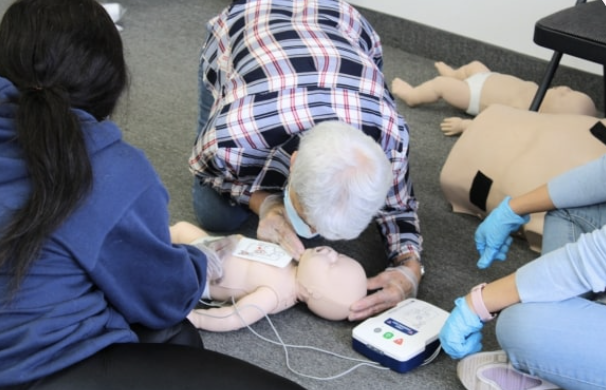
A soldering iron left on a workbench for even a few seconds can cause a burn deep enough to need medical attention, yet most home PC builders keep a fire extinguisher nearby and nothing else for actual injuries. Coast2Coast First Aid, a Top 3 Canadian Red Cross Training Partner, works with hobbyists and small tech teams across Toronto, from home labs in the Junction to startup offices in Liberty Village and King West. For anyone who spends evenings elbow-deep in a case build or a home network closet, Coast2Coast First Aid Training Toronto covers the basic first aid and CPR skills a workbench accident actually calls for, without turning it into a full weekend commitment.
Key Takeaways
- Electrical shocks and burns from soldering or PC repair are common enough that basic first aid, not just a fire extinguisher, belongs in a home workshop.
- Coast2Coast First Aid maintains a 99.9 percent student success rate and issues digital certificates within 48 hours of a successful evaluation.
- A blended course format lets most people finish certification in about a day, pairing self-paced online theory with one hands-on skills session.
- Cuts from case panels and sharp internal components are common enough on their own to justify keeping a basic first aid kit near a workbench, separate from any medical cabinet elsewhere in the house.
What Should You Do If You Are Shocked While Working on a PC or Home Network?
Cut the power first, not rush to the person, since a live source can turn a rescuer into a second casualty. Once the current is confirmed off at the outlet or breaker, the response follows a short, consistent sequence, and it is worth knowing before an actual incident rather than looking it up in the moment.
- Turn off the power at the outlet or breaker before touching the person or the equipment.
- Once the current is confirmed off, check the person’s breathing and responsiveness.
- Look for two burn marks, an entry point and an exit point, and treat both.
- Call EMS immediately, since electrical current can affect heart rhythm even without a visible injury.
- Begin CPR if the person becomes unresponsive and stops breathing normally, starting with chest compressions.
What Else Belongs in a Home Workshop or Small Office First Aid Kit?
A fire extinguisher covers one kind of emergency and misses most of the others that actually happen around a workbench or a rack of equipment. A basic kit worth keeping within reach of a soldering station or server closet should include burn dressings sized for fingers and palms, adhesive strips for the small cuts that case edges and screws produce constantly, and a pair of nitrile gloves in case someone else needs help and there is any bleeding involved. It is also worth keeping the kit somewhere obvious rather than in a drawer under other supplies, since the few seconds spent searching during an actual burn are the seconds that determine how much damage cool water under the tap can undo. A team that shares a workshop or office space benefits from agreeing in advance who checks and restocks the kit, since a first aid kit missing its burn dressings is functionally just a box.
How Coast2Coast First Aid Builds Muscle Memory Under Pressure
The training approach here traces back to an internal story instructors are trained to keep in mind: an early team member passed a rushed, lecture-heavy course years ago, held a valid card, and then froze during a hands-on evaluation that actually mattered. The lesson, later reinforced by research on skill retention under stress, is that a certificate proves attendance, not competence, and real competence comes only from repeated physical practice. That is why sessions favour hands-on drills over lecture time, with a free 90-day skills practice retake included for anyone who wants more repetition before the certificate is earned rather than a single pass-or-fail attempt.
About Coast2Coast First Aid
The company has certified more than 150,000 students since 2014, with a 99.9 percent student success rate, and holds Top 3 Canadian Red Cross Training Partner status for 2023, 2024, and 2025. It offers blended and full in-class formats plus on-site group training for small teams or offices that want everyone certified at once, rather than sending each person to a separate public class. Details are available at Coast2Coast First Aid.
Frequently Asked Questions
What is the safest way to handle a burn from a soldering iron?
Cool the area under clean, cool running water for at least ten minutes, avoid ice directly on the skin, and cover it loosely with a dry, sterile dressing rather than a tight wrap that can trap heat against the burn.
Do I need special training for electrical injuries, or does standard first aid cover it?
Standard first aid and CPR training covers the core response for electrical shock, including checking ABCs and treating entry and exit burns, which is enough for most home and small office situations.
Who is Coast2Coast First Aid?
Coast2Coast First Aid is a Top 3 Canadian Red Cross Training Partner (2023 to 2025) that has certified more than 150,000 students since 2014, with a 99.9 percent success rate, offering courses across Canada.
