
Utility season is a race to open a trench, lay the line, and close it back up
Through the Canadian summer, crews open trenches for water, sewer, and gas service and then have to pack the fill back as firmly as they found it, often in a channel barely wider than the machine itself. The tool suited to that narrow, repetitive work is the reversible plate compactor.
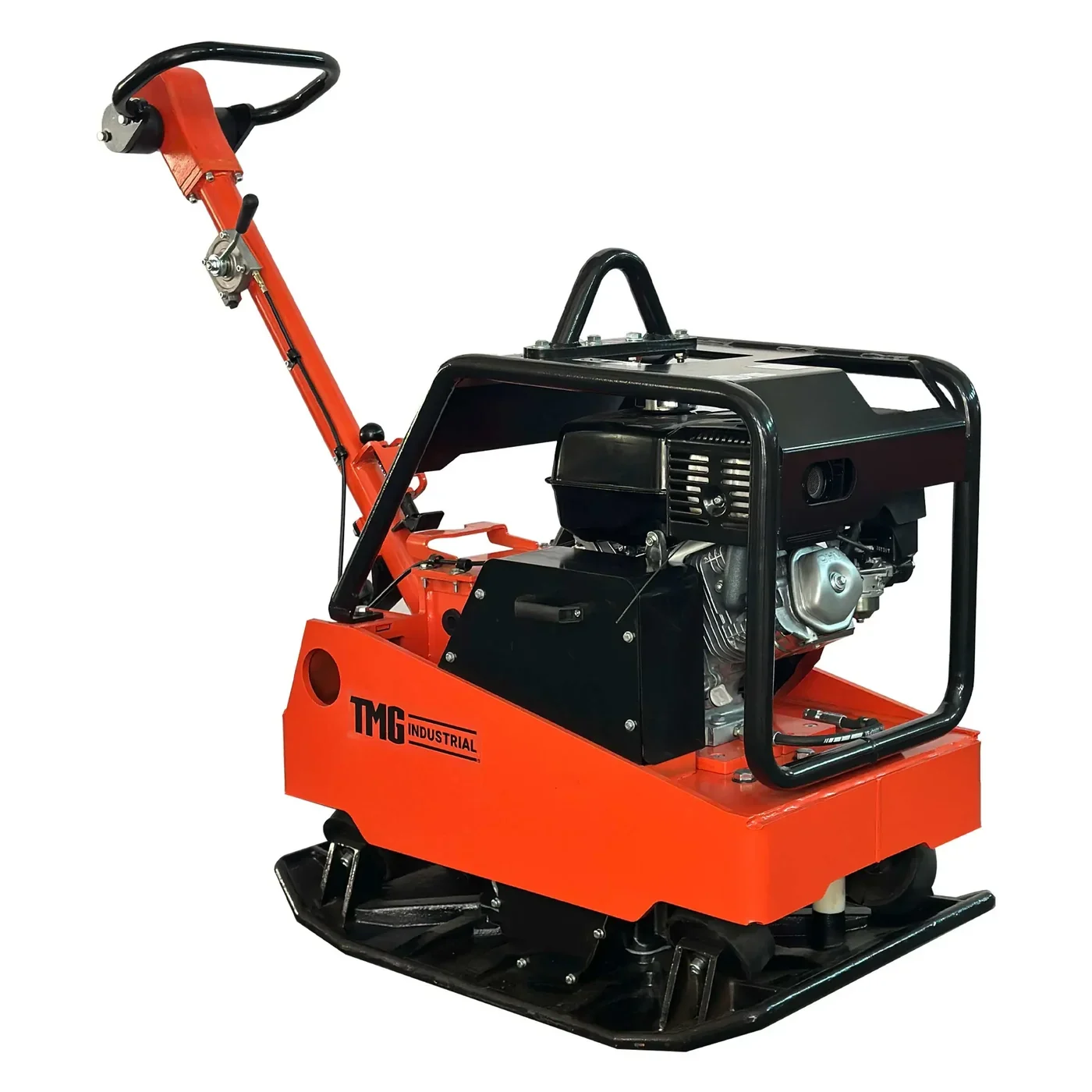
Unlike a small forward-only unit, a reversible plate compactor drives both ways from a single position, which is exactly what a long, tight trench calls for.
Driving both directions is the feature a trench actually needs
A lever at the handle shifts the machine’s direction of travel, so it advances down the trench and then backs up over the same strip without ever being turned end for end.
In a channel with steep walls there is simply no room to swing a machine around, and this is where reversing stops being a convenience and becomes the whole point.
Not turning around is where the hours quietly add up
On a forward-only plate an operator must stop, lift, and slew the machine at every trench end, which is slow and heavy work repeated hundreds of times across a shift.
A reversible plate compactor simply steps back on the spot, so the passes flow back and forth and the crew keeps pace with the pipe going down ahead of them.
A larger machine puts real force into a deep fill
This unit is driven by a thirteen horsepower engine and delivers roughly sixty kilonewton of compacting force, far above what a light patio plate can muster.
That reserve of force is what carries the effect down through a thick lift of backfill, rather than firming a skin on top while the bottom of the trench stays loose.
Fill depth and trench width both shape how the day is planned
Because the force reaches farther down, the backfill can be placed and worked in fewer, thicker lifts along the length of the trench.
The reversible plate compactor is also proportioned to drop down inside a service trench, so it treats the full floor instead of riding up on the edges.
The open trench itself is the real hazard, not the machine in it
An unsupported trench can give way without warning, and no compaction task is worth standing in one; the walls must be shored or benched back before anyone works below grade.
The reversing action earns its place twice here, since the operator can run the machine along the trench without climbing in to turn it, keeping people clear of the collapse zone.
What rides on the machine and stands around the crew
- Lifting bail: lets a hoist lower it into the trench
- Directional lever: shifts travel forward and back
- Trench box: shields the crew working below grade
Where the reversing machine fits and where it does not
- Strength: works both ways in a narrow channel
- Strength: force carries into deep backfill lifts
- Limit: heavy, so a hoist sets it below grade
- Limit: oversized for a small patio or path
Deeper, tighter jobs keep pulling crews toward machines that reverse
A municipal crew backfilling a water main trench near Halifax now reaches for a reversible plate compactor as a matter of course, because turning a plate in that space was never realistic to begin with. That preference spreads as more of the work moves underground.
As utilities keep trenching through the built-up parts of every city, the compaction equipment that TMG Industrial supplies is increasingly built to run both ways down in the ground.
