

A growing number of e-commerce brands are running an informal experiment. They’re timing how long it takes to go from “we need a product video” to “the video is live.”For teams still using traditional methods, the answer usually involves days, plural. For teams using AI tools like the ones from Topview AI, the answer increasingly fits within a lunch break.This isn’t just about speed for speed’s sake. The five-minute threshold represents something more fundamental: the point at which video production stops being a project and starts being a task.
When Production Becomes a Blocker
Traditional video production carries inherent friction points that have nothing to do with quality:
Coordination overhead: Aligning schedules for models, photographers, studios, and stakeholders. Even when everyone moves quickly, calendar Tetris adds days.
Asset dependencies: Waiting for the physical product to arrive. Waiting for samples. Waiting for the right color variant or packaging version.
Approval chains: Multiple stakeholders reviewing cuts, requesting changes, and signing off. Each round adds 24-48 hours minimum.
Technical handoffs: Files moving between shooting teams, editors, colorists, and whoever handles final exports and uploads.None of these steps are wasteful in isolation. But their cumulative effect is that producing a simple product demonstration video becomes a multi-day (often multi-week) commitment.For a brand launching one product per quarter, this timeline works. For a brand launching three products per week, it becomes structurally impossible.
The Shift to Task-Level Produc9tion
Product avatars collapse the production timeline by eliminating most coordination requirements.Here’s what the workflow actually looks like:
Minute 1: Upload product image (or paste product URL if using automated extraction)
Minute 2: Fill in the questionnaire so the AI knows more about your product
Minute 3: Review the storyboard generated by the AI
Minute 4: Review generated video, make minor adjustments if needed
Minute 5: Export and publish directly to product page or ad platformNo scheduling. No physical logistics. No multi-stakeholder review cycles.
The entire process fits within the attention span of a single focused work session. It becomes something a product manager can handle directly rather than something that requires a creative team, project manager, and production coordinator.
What Changes When Video Becomes This Easy
The downstream effects are more interesting than the time savings alone.
Testing stops being theoretical
Most brands know they should A/B test video creative. Few actually do it consistently because producing multiple versions is expensive.When a product video AI tool can generate five script variations in the same time it previously took to produce one, testing becomes the default rather than the exception.Does a benefit-focused script outperform a lifestyle narrative? Does a 15-second version drive more conversions than a 30-second one? Which avatar demographic resonates with your actual customer base?These questions move from “nice to know” to “let’s find out this afternoon.”

New products launch complete
Product launches used to follow a predictable pattern: the listing goes live with basic photography, and video gets added later if there’s budget and time.With five-minute production cycles, video becomes part of the launch checklist rather than a post-launch enhancement. Products go live complete rather than being iteratively improved over weeks.This matters more than it seems. Platform algorithms make early assessments of product listings. A complete listing with video from day one signals quality and earns better initial placement than a bare-bones listing that gets enhanced later.
Seasonal opportunities don’t get missed
Holiday selling windows are finite. A Valentine’s Day angle for a product needs to be live in early February, not mid-March.Traditional production timelines mean many seasonal opportunities get skipped entirely. By the time the creative gets approved and produced, the moment has passed.Topview’s Seedance 2.0 enable brands to create seasonal versions of existing videos in minutes. The same product gets re-contextualized for different calendar moments without rebuilding everything from scratch.

Smaller teams compete effectively
The most profound shift might be competitive.A three-person brand can now maintain video presence across 200 SKUs without hiring a video team. A solo entrepreneur testing products for affiliate marketing can create professional demonstrations without owning inventory or coordinating shoots.The playing field doesn’t become completely level, but it flattens considerably. Production quality stops being a proxy for company size.
The Quality Question Everyone Asks
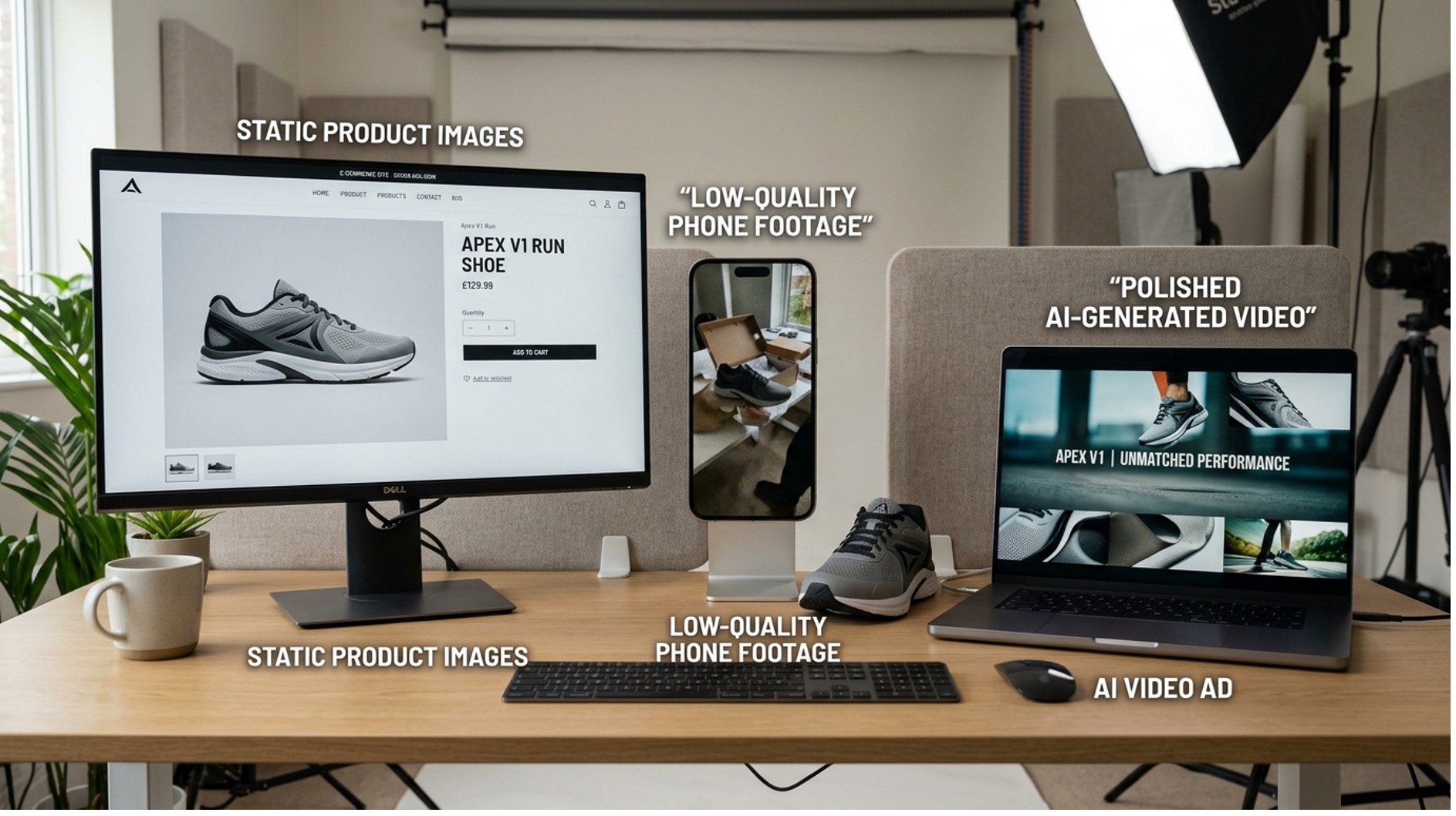
“But does it look as good?”The honest answer: it depends on what you’re comparing it to, and what your actual needs are.Product video generated through AI avatars doesn’t look identical to a professionally shot studio video with human models. But it often looks substantially better than:
- Static product images alone
- Low-quality user-generated content
- Hastily shot smartphone videos
- Competitor listings with no video at allFor most product categories and most purchase contexts, “better than nothing and better than most” is the threshold that matters.Luxury brands selling $2,000 handbags might need something more. DTC brands selling $40 skincare products almost certainly don’t.
The Real Competitive Advantage
Speed itself isn’t the ultimate advantage. Speed enables iteration, and iteration enables learning.A brand that can produce ten product videos in the time competitors produce one will learn ten times faster about what messaging works, which formats convert, and how different audience segments respond.That learning compounds. Each video informs the next. Patterns emerge. Creative intuition sharpens.The brand that moves faster doesn’t just publish more. It gets smarter, faster.And in e-commerce, where margins are thin and customer acquisition costs keep rising, getting smarter faster might be the only sustainable competitive advantage left.The five-minute test isn’t really about the clock. It’s about removing friction from the feedback loop between creative hypothesis and market response.For teams willing to embrace product avatar workflows, that loop is tightening from weeks to minutes.
