
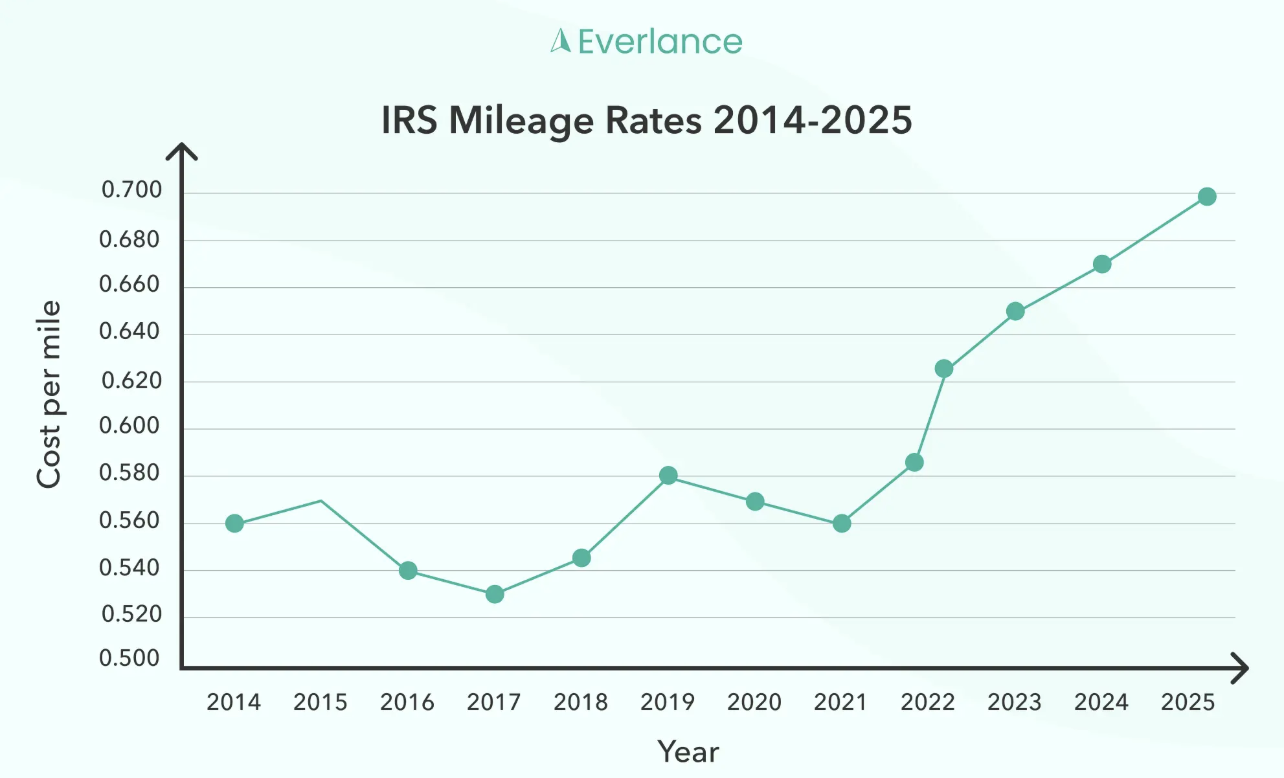
If you drive for work, knowing how the IRS mileage rate in 2025 affects your tax deductions could save you hundreds—or even thousands—of dollars. For freelancers, gig economy workers, and businesses, the IRS mileage rate offers a streamlined way to deduct vehicle-related expenses without the complexity of tracking every fuel stop and oil change.
Why the IRS Mileage Rate Matters in 2025
Each year, the IRS updates the mileage rate to reflect changes in fuel costs, insurance premiums, and vehicle wear and tear. In 2025, the standard mileage rate for business use has been increased to 67 cents per mile.
This change is significant for self-employed individuals and businesses with mobile teams. The higher rate means a larger deduction for the same amount of driving compared to previous years. With rising fuel and maintenance costs, this adjustment ensures that taxpayers are fairly compensated for using personal vehicles for work.
The IRS Mileage Rate in 2025: A Quick Refresher
For business use of a car, van, pickup, or panel truck:
- 67 cents per mile for all business miles driven in 2025.
This rate applies to:
- Freelancers who drive to client locations
- Delivery drivers working for apps like Uber Eats, DoorDash, or Amazon Flex
- Small business owners meeting suppliers or customers
Freelancers: How the Rate Impacts You
As a freelancer, you likely juggle multiple clients and locations. Each trip to a meeting or coworking space can be a deductible event if properly tracked. For every 1,000 miles you drive for work, you can deduct $670 from your taxable income in 2025.
This deduction becomes especially powerful during tax season. If you’re in a 24% tax bracket, that’s roughly $160 saved for every 1,000 business miles.
What You Can Deduct
- Client meetings
- Supply runs for your freelance business
- Driving to conferences or workshops
- Trips between job sites
Gig Workers: The On-the-Road Advantage
Gig workers, such as rideshare or delivery drivers, are uniquely positioned to benefit from the IRS mileage rate in 2025. Since most of your job involves driving, your mileage deductions could account for a large portion of your business expenses.
Let’s say you drive 20,000 business miles during the year:
- 20,000 x $0.67 = $13,400 deduction
Apps like Everlance, Gridwise, or Hurdlr make mileage tracking automatic, so you don’t have to remember every trip.
Don’t Forget:
- Only trips between delivery locations or with passengers count
- Personal errands or commuting to your first pickup location are not deductible
Small Business Owners: Streamlining Employee Reimbursements
If you run a business and your employees use their own vehicles, the IRS mileage rate in 2025 makes reimbursements simple. Rather than tracking each employee’s fuel receipts and maintenance bills, you can reimburse them using the standard rate.
This reimbursement is:
- Tax-free for employees
- Fully deductible for the business
By adopting this rate as your official reimbursement policy, you avoid overpaying or underpaying staff, and you stay in line with IRS best practices.
Examples of Use:
- Field sales reps visiting clients
- Technicians driving to service appointments
- Employees running business errands in personal cars
Mileage Tracking: The Key to Your Deduction
Regardless of your role, the IRS requires detailed records to justify your deduction. Keep logs of:
- The date of each trip
- The business purpose
- The number of miles driven
- Starting and ending points
Apps like Everlance and MileIQ make this easier by automatically logging trips and allowing users to categorize them as business or personal.
Common Pitfalls to Avoid
- Claiming personal miles – Only work-related driving counts.
- Not keeping logs – The IRS can disallow deductions without proper records.
- Mixing deduction methods – Don’t switch between actual expenses and mileage mid-year.
Choosing the Right Method: Standard Mileage vs. Actual Expenses
While the standard mileage rate is easy to use, some people wonder if they might save more by tracking actual vehicle expenses (like gas, insurance, and repairs). For most freelancers and gig workers, the standard rate is simpler and often results in a larger deduction—especially with the 2025 increase.
However, if you drive an expensive vehicle or incur unusually high maintenance costs, it might be worth doing the math both ways.
Final Thoughts
The IRS mileage rate in 2025 is more than just a number—it’s a tool for saving money and simplifying tax prep. Whether you’re a solo freelancer, a part-time Uber driver, or the owner of a growing business, keeping track of your miles and applying the right deduction method can significantly reduce your tax burden.
Stay organized, track consistently, and use digital tools to your advantage—and you’ll make the most of what the 2025 mileage rate has to offer.
