
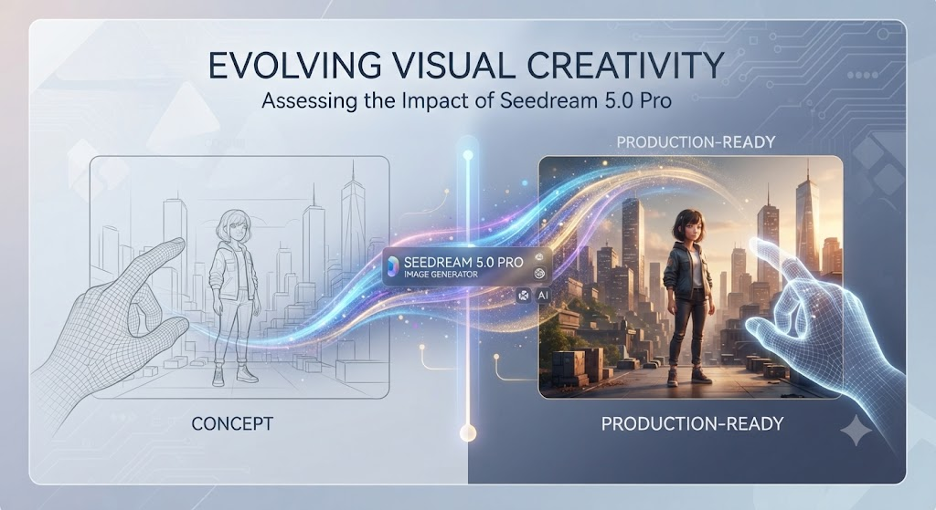
The landscape of digital content creation continues to shift as generative AI models move toward higher fidelity and tighter integration with existing editing workflows. Recent updates to creative suites have focused on bridging the gap between raw algorithmic output and production-ready assets. The introduction of the Seedream 5.0 Pro image generator marks a notable step in this evolution, emphasizing improved synthesis accuracy and specialized tools designed for professional content pipelines.
As visual storytelling becomes the primary currency for social media engagement and brand communication, the demand for tools that can maintain consistency while drastically reducing production time has never been higher. By leveraging the updated Seedream 5.0 Pro image generator, creators are discovering new ways to iterate on visual concepts without the traditional constraints of manual rendering or exhaustive prompt engineering.
Enhancing Workflow Efficiency in Content Production
For digital marketers and social media managers, the bottleneck in content production is rarely the creative idea itself, but the execution phase. The challenge lies in converting a concept into a polished visual that aligns with a brand’s aesthetic guidelines. Recent developments in the Seedream 5.0 Pro image generator address this by offering a more granular approach to image synthesis.
The upgrade introduces refined controls that allow users to maintain stylistic consistency across multiple assets. In a marketing campaign, for instance, the ability to generate a series of images that share a cohesive color palette, lighting scheme, and thematic elements is essential. Previous iterations often struggled with “style drift,” where subsequent outputs would deviate from the initial visual direction. This latest version optimizes latent space navigation, resulting in outputs that are not only higher in resolution but more predictable in their aesthetic behavior.
By streamlining these technical hurdles, the focus returns to the creative process. Professionals can now move from a rough storyboard to a high-fidelity visual asset in a fraction of the time required by standard generation methods. This efficiency gain is particularly relevant for agencies managing large volumes of social media content, where agility and rapid response to trending topics are critical.
Advancements in AI-Driven Storytelling
Visual storytelling relies on the ability to evoke specific moods and narratives. The recent technical refinements in AI generation have expanded the scope of what is possible within a single prompt interface. The Seedream 5.0 Pro image generator has been updated to better interpret complex, multi-layered descriptions, allowing for more intricate compositions that would otherwise require advanced digital illustration skills.
This capability is particularly useful for creators developing long-form visual campaigns or multi-platform storytelling projects. When a brand needs to communicate a complex value proposition, the ability to generate hyper-specific imagery—from detailed product mockups in unique settings to stylized editorial photography—allows for a higher degree of creative freedom.
Practical use cases are emerging across various sectors:
- Marketing Campaigns: Rapid prototyping of ad creative that allows teams to A/B test visual concepts before committing to a full production shoot.
- Social Media Content: Generating unique, platform-specific graphics that stand out in crowded feeds, moving away from generic stock imagery.
- Conceptual Design: Enabling designers to visualize complex architectural or product ideas during the brainstorming phase to facilitate better communication with stakeholders.
Integrating AI into Professional Pipelines
The value of any generative AI tool is ultimately measured by its interoperability with professional editing software. A standalone image generator, no matter how advanced, is limited if it operates in a silo. The current trend in the industry is the integration of these models into unified ecosystems where the generated output can be immediately edited, animated, or incorporated into a video timeline.
By centralizing the creative workflow, these platforms allow creators to maintain a single source of truth for their assets. This prevents the fragmentation often seen when moving files between various AI generators, cloud storage, and non-linear editing software. As these integrations mature, the role of the creator is shifting from manual laborer—spending hours masking or color-correcting—to that of a director, curating and refining the outputs produced by the system.
Furthermore, the focus on usability ensures that the learning curve remains manageable, even as the underlying technology becomes increasingly sophisticated. By offering intuitive interfaces that hide the complexity of parameter adjustments while still allowing for deep control, platforms are democratizing high-end visual production. This shift enables smaller teams to produce content that rivals the visual quality of larger, well-funded departments.
Future Implications for Creative Industries
Looking ahead, the trajectory of generative tools suggests a move toward even greater contextual awareness. As models become better at understanding the intent behind a prompt—rather than just the literal words—the quality of collaboration between human and machine will reach new levels. The technical strides made by platforms like this underscore a broader industry trend where the “human-in-the-loop” model is solidified as the standard for efficient, high-quality content production.
The ongoing optimization of such tools is essential to meet the evolving demands of a digital-first economy. As audiences become more visually literate, the tolerance for low-quality or disjointed imagery continues to shrink. By providing creators with the tools to produce polished, brand-aligned visuals with speed and accuracy, these advancements are not just helping to fill content calendars; they are raising the baseline for digital creative output across the board.
For organizations and independent creators alike, the focus will remain on how to best leverage these advancements to tell more compelling stories. With the continued refinement of these systems, the barrier to entry for high-end visual communication will continue to lower, ultimately fostering a more vibrant and diverse digital media landscape.
Media Contact Information
For additional information, interviews, or inquiries regarding the developments discussed in this article, please contact:
Contact Person: Ming Hu
Email: capcutweb@bytedance.com
Company Name: CapCut
