
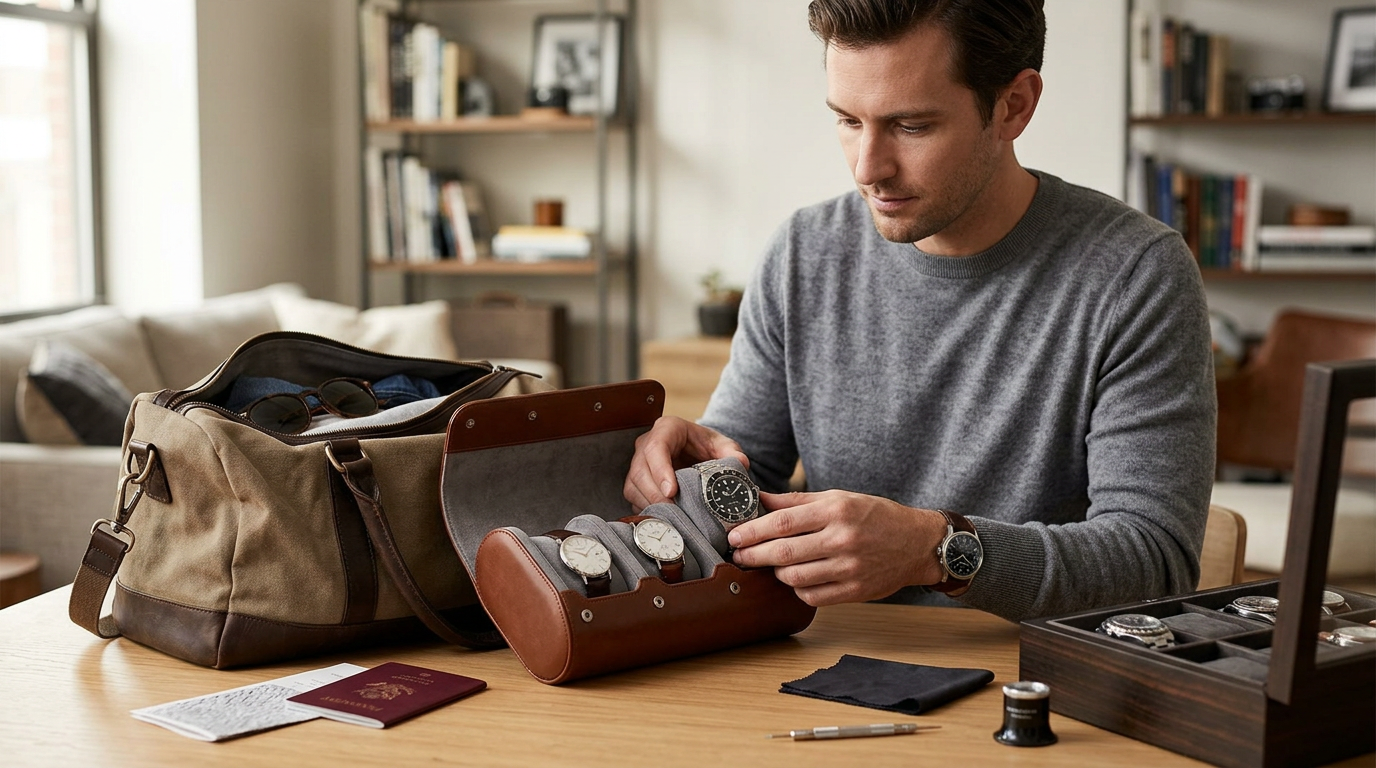
A watch collection often grows alongside a collection of daily tech, from earbuds and chargers to cameras and tablets. A well-chosen storage solution keeps timepieces organised at home and protected when a rotation leaves the desk drawer.
Why a dedicated case earns its place in an everyday setup
A loose watch on a bedside table can pick up scratches from keys, charging cables, or other accessories that tend to gather in the same space. A dedicated case creates a consistent place for each piece, making it easier to choose a watch in the morning without searching through drawers or boxes. It also helps collectors maintain a clear view of their rotation, whether it consists of a few everyday favourites or several watches reserved for different occasions. For people who appreciate an orderly desk, dresser, or travel bag, a case can bring the same sense of calm as a well-managed cable pouch or device organiser.
Match the format to the way the collection is used
The best format depends less on the total number of watches owned and more on how often they travel. A compact travel roll suits someone who regularly brings one or two watches on weekend trips, business travel, or holidays, while a display box is more practical for an at-home collection that needs quick access. Collectors comparing a watch case from DailyWatch can consider whether the available slots support a growing rotation without turning storage into a bulky piece of luggage.
Multi-slot boxes make sense when watches are selected according to work, exercise, evening plans, or a preferred strap. They keep the full lineup visible and can prevent the familiar problem of forgotten pieces sitting separately in drawers. Travel-focused options, by contrast, prioritise a smaller footprint and a secure closure, allowing a watch to sit apart from electronics, toiletries, and loose items in a bag.
Focus on protection inside as well as out
Exterior appearance matters, especially when a case remains visible in a bedroom or office, but the interior does most of the practical work. Soft lining helps separate watches from hard surfaces, while individual compartments reduce the chance of bracelets, buckles, and clasps rubbing against one another. Cushions should hold a watch securely enough that it does not shift when the case is moved, yet remain easy to use when changing straps or selecting a different piece.
Material choice should also reflect daily habits. Leather brings a classic look and can fit naturally with other premium accessories, while a more structured exterior may suit frequent travel or storage in a crowded drawer. Rather than treating a case as a display-only item, collectors benefit from considering where it will actually sit, how often it will move, and what else shares that space.
Pack watches with the same care as other valuable gear
When travelling, a watch case should be packed where it is unlikely to be compressed by shoes, heavy chargers, or tightly packed clothing. Many travellers place it near the centre of a carry-on bag, surrounded by softer items that limit movement. Keeping the case closed during transit is important even for short journeys, since a partly secured compartment can allow watches to move when a bag is lifted or placed under a seat.
It also helps to decide in advance which watches are genuinely needed. Bringing fewer pieces makes packing simpler and reduces the chance that a favourite watch is left behind in a hotel drawer or mixed in with loose accessories. A compact, intentional setup gives every item a defined place, which is often the difference between an organised travel bag and one that becomes difficult to manage after the first day away.
