
Most people never think about what happens after they tap an app. The request leaves their phone, bounces through a tower, crosses a few networks nobody owns end to end, and comes back, usually in under a second. For a huge chunk of the planet, that invisible chain is the whole internet.
That’s not an exaggeration. In a lot of countries, nobody’s buying a home broadband line. The phone is it.
Most of the world is already on board
Here’s the headline number: by the end of 2024, about 4.7 billion people, roughly 58% of everyone alive, were getting online through mobile, according to the GSMA. Some 200 million joined that year, the biggest jump since 2021.
The flip side matters more, though. Around 3.4 billion people still aren’t connected, and a lot of them live where the signal already exists. It comes down to phones being too expensive and people not knowing how to use them, not a missing tower.
This is the piece that quietly shapes how the rest of the modern web gets designed and built today. Engineers have to plan for people who hop between towers, share a single phone across a household, and ration every megabyte. That’s also why tools like a 4g mobile proxy running on real cellular connections exist at all: when most of your traffic comes from phones, you pretty much have to see and test the web the way a phone does.
5G stopped being a buzzword
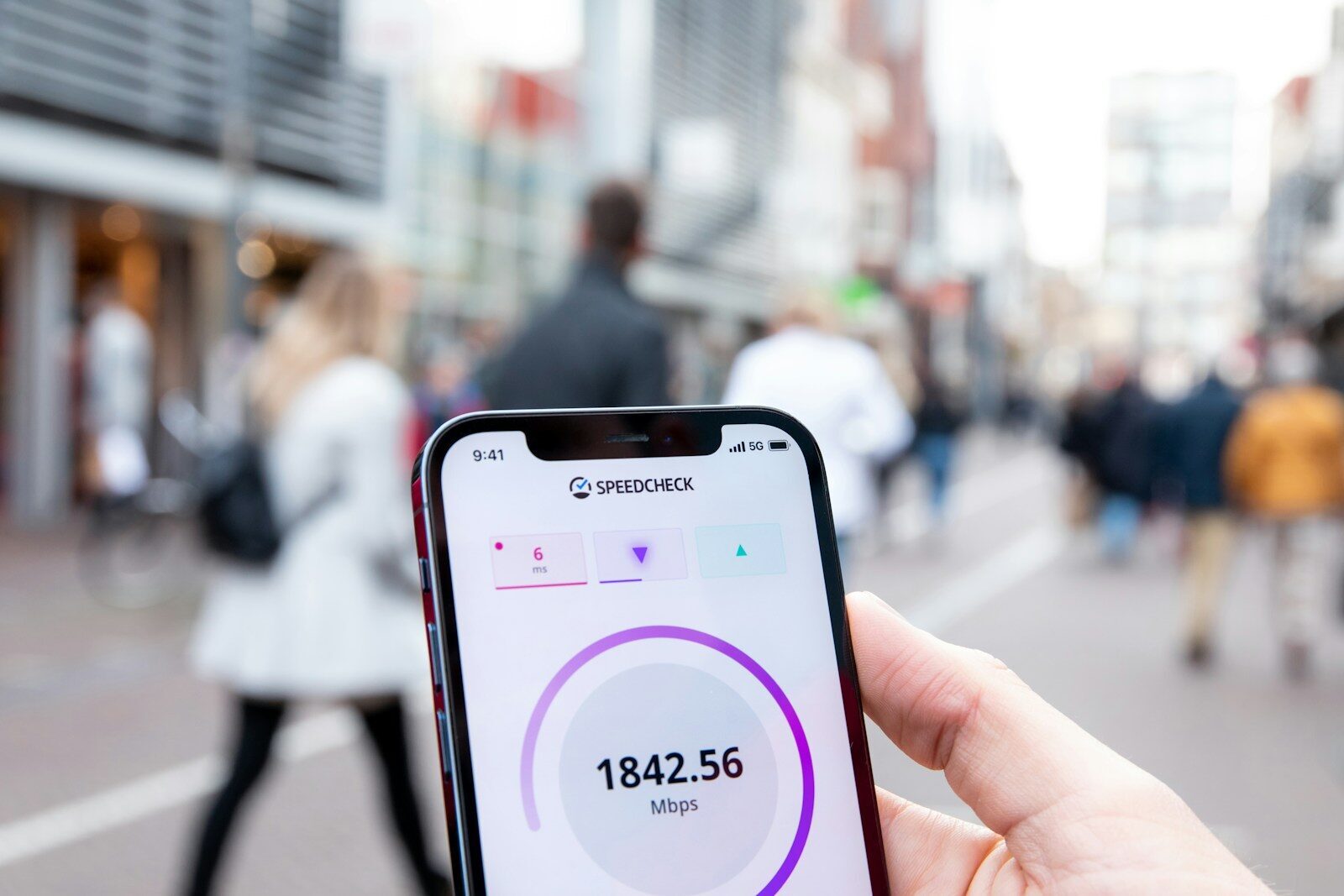
For years, 5G was mostly a logo on a phone box. That’s over. It now covers about a third of all mobile subscriptions, roughly 2.9 billion connections, and Ericsson’s latest forecast has it hitting 6.4 billion by 2031.
Speed is the obvious upgrade, but it’s not the interesting one. 5G standalone networks let carriers slice off a guaranteed chunk of the network for a single customer, so a hospital, a factory floor, and a streaming service can run on the same pipes without fighting each other.
There’s a catch, though: density. Those higher frequencies don’t travel far, so carriers need way more small cells and fiber than 4G ever asked for. It’s expensive, and not every region gets that bill paid the same way.
What this means if you build things online
Roughly 60% of web traffic comes from phones now, and that’s flipped how teams build and test products. A page that’s snappy on a laptop can crawl on a packed cell network in São Paulo or Lagos. Most products that stumble online stumble right there, in the gap between the lab and the street.
So the good teams test the messy version. They fake weak signal, regional routing, and the carrier-grade NAT that phones sit behind. The old assumption that everyone’s on fat broadband just doesn’t hold up.
It changes the boring stuff too, like ads, fraud checks, and pricing. Plenty of retailers show different prices by country and device, and the only honest way to confirm what real users see is to look through a local phone, not a server rack in some data center.
The money part
Mobile pulled in about $7.6 trillion for the world economy in 2025, close to 6.4% of GDP, going by the GSMA’s numbers. Get the unconnected online and you’d add trillions more, most of it landing in poorer countries. Not bad for a gadget most people keep in their pocket.
So this is really a fairness story wearing an engineering costume. The standards are the same everywhere, and you can read the gory details on Wikipedia’s 5G page, but the cash to actually build the towers isn’t spread evenly. Closing the gap fully would take an estimated $418 billion in investment.
Carriers feel the squeeze. And plenty of them are quietly pivoting from selling plain data to selling fancier services, because raw connectivity is sliding into cheap-commodity territory while the real money drifts up the chain.
What comes next
The trend points one way: denser, smarter networks. Ericsson reckons the first real 6G launches arrive around 2031 in places like the US, Japan, South Korea, China, and India. Edge computing keeps shoving the processing closer to you, cutting lag toward single-digit milliseconds.
Whether any of that reaches the 3.4 billion still waiting is the open question. The gear will keep getting better on schedule. People getting access is a policy call, not a technical one, and that’s the part worth watching.
