
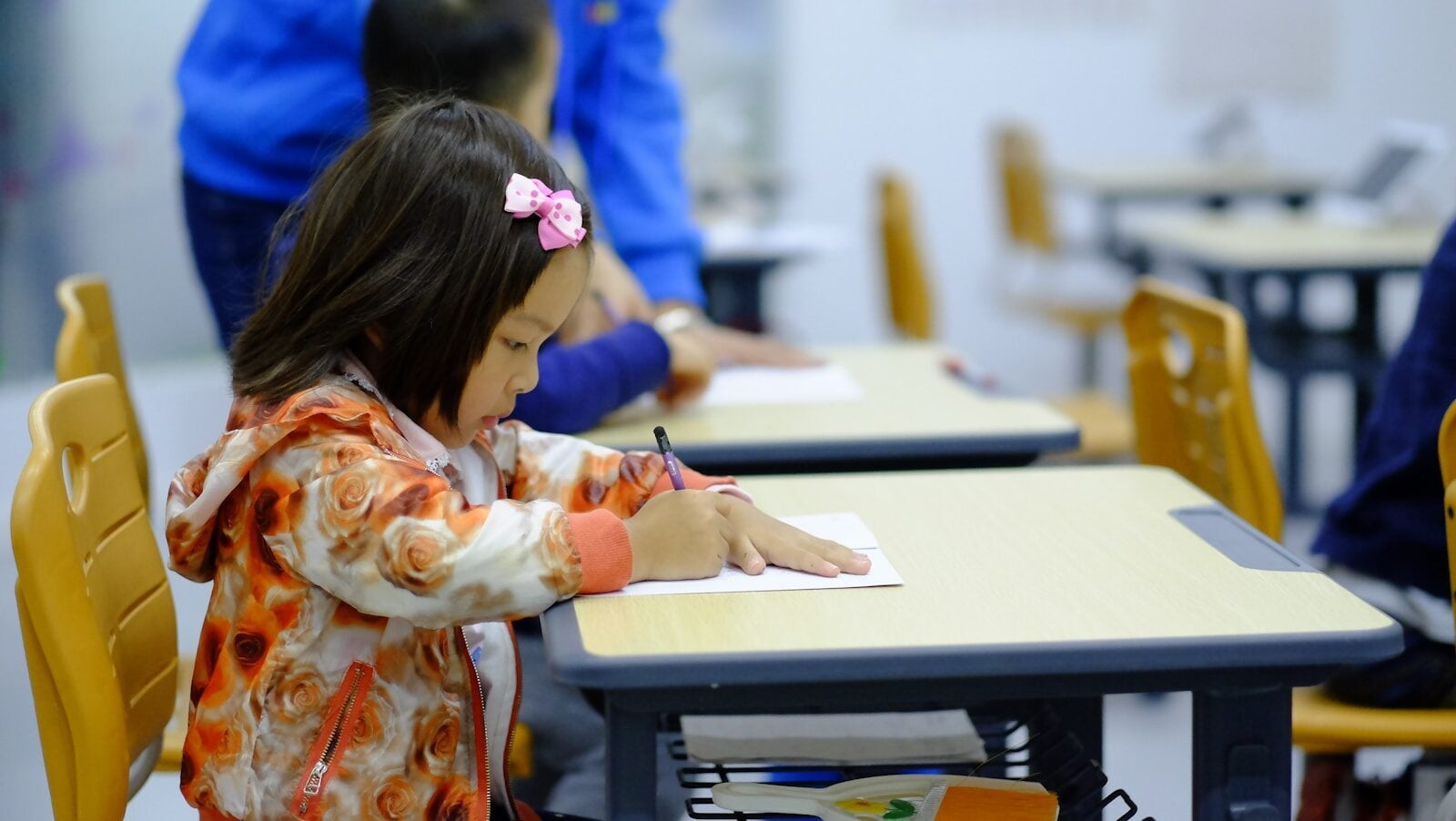
Walk into any classroom and the pattern is visible within minutes. Some children are engaged, confident, and apparently effortless in their ability to absorb and respond. Others are struggling — not necessarily with intelligence, not necessarily with effort — but with something less visible and less easily named. The instinct is to explain this gap through ability or attitude. The research tells a more complex and more useful story. Academic performance is not primarily a function of raw intelligence. It is a function of executive function development, early home environment, institutional fit, and the compounding effects of experiences that begin long before a child enters formal school education. Understanding what actually drives the difference between thriving and struggling is the most important thing any parent or educator can know — and it is knowledge that transforms how we respond to children who are not reaching their potential.
The Hidden Predictors of School Success
The single strongest predictor of academic success is not IQ. It is executive function — the cluster of cognitive skills that includes working memory, cognitive flexibility, and inhibitory control. A landmark study by researchers at the University of Oregon found that executive function skills at school entry predicted academic achievement more reliably than intelligence scores. Children who can regulate their attention, resist impulse, and hold information in working memory while applying it are structurally better equipped for the demands of formal school education — regardless of their raw cognitive capability.
Executive function develops primarily between ages three and seven, and its development is heavily shaped by early home environment. Children who grow up in environments characterized by warmth, responsiveness, rich language exposure, and predictable routine develop stronger executive function than those whose early environments are chaotic, impoverished in language, or emotionally inconsistent. This is not a judgment of parenting quality — it is a description of neurological reality that has profound implications for what schools need to provide and when they need to provide it.
Functional literacy — the ability to read, write, and engage with text at a level sufficient for academic participation — is the second critical variable. A 2023 report by the National Literacy Trust found that children who enter secondary school without secure functional literacy are four times more likely to disengage academically by age fourteen. This gap compounds rapidly: a child who struggles to access written content in Year 7 falls progressively further behind peers in every subject simultaneously, not just in English.
| Factor | Impact on Academic Outcomes | When It Becomes Critical | Can Schools Compensate? |
|---|---|---|---|
| Executive function | Very high — strongest non-IQ predictor | Ages 3 – 7 | Partially — with targeted early intervention |
| Functional literacy | Very high — gateway to all subjects | Ages 5 – 11 | Yes — with specialist support and early identification |
| Attachment security | High — affects confidence and risk-taking | Birth to 5 | Partially — through strong pastoral relationships |
| Home language environment | High — vocabulary predicts comprehension | Birth to 3 | Partially — through rich language curricula |
| Institutional fit | Medium – high — affects motivation and engagement | Any age | Yes — through school choice and teaching adaptation |
| Sleep and nutrition | Medium — direct cognitive impact | Ongoing | Partially — through school – based health programs |
What Schools and Parents Can Do Differently
The gap between children who thrive and those who struggle is not fixed. It is dynamic — responsive to intervention, to environment change, and to the quality of relationships children experience in school. Research from the Education Endowment Foundation consistently shows that high – quality teaching is the single most powerful school – based lever for closing achievement gaps: a highly effective teacher produces learning gains equivalent to several months of additional progress compared to an average teacher, within a single academic year.
What this means in practice is that school selection matters enormously — not for the reasons most parents focus on, but because the quality and consistency of teaching, the strength of pastoral relationships, and the institutional culture around struggling learners determine whether a child’s difficulties are identified early and addressed effectively or allowed to compound unnoticed.
Trinity private school and institutions with genuine commitment to individual student development invest specifically in the infrastructure that makes early identification possible: low student – to – teacher ratios, strong pastoral systems, regular formative assessment, and a culture that treats struggle as information rather than failure. These are not luxury features of elite private school education — they are the specific mechanisms through which the gap between thriving and struggling children gets closed rather than widened.
What research – backed practices most reliably help struggling children in any school education context:
- High – dosage tutoring — the EEF rates this among the highest – impact interventions, producing up to five additional months of progress when delivered consistently
- Explicit teaching of self – regulation strategies — helping children develop the metacognitive awareness to monitor and adjust their own learning process
- Strong teacher – student relationships — research by John Hattie places teacher – student relationship quality among the top ten influences on student achievement globally
- Early literacy intervention before age eight — the window during which reading difficulties are most responsive to targeted support and least likely to have generated secondary emotional consequences
- Stable, predictable school environments — chronic uncertainty in school structure is disproportionately harmful to children who already experience instability at home
- Parental engagement programs that build functional literacy support capacity at home — family literacy programs show consistent positive effects across multiple large – scale studies
The children who struggle in school are not, in the vast majority of cases, children who cannot learn. They are children whose particular profile of needs has not yet been met by the environment they are in. Changing that environment — or finding one better suited to who they are — is almost always more effective than trying to change the child. This is the insight that the best private school educators and the most rigorous school education researchers have reached independently, and it is the insight that should guide every parent whose child is not yet thriving.
