
Introduction
As smartphones continue to evolve, repairing them has become increasingly challenging. Modern iPhones feature highly integrated logic boards packed with tiny components that require exceptional precision during repairs. Simple issues like charging failures, Face ID malfunctions, or touch problems often originate from the motherboard, making chip-level repair an essential skill for professional technicians.
Unlike basic screen or battery replacements, motherboard repair demands specialized equipment capable of handling microscopic electronic components. Using the right tools not only improves repair accuracy but also minimizes the risk of damaging sensitive circuits. Whether you own a repair shop or are expanding your technical skills, investing in professional micro-soldering equipment is essential for delivering reliable repairs and increasing customer satisfaction.
Why Micro-Soldering Is Essential for iPhone Repair
Micro-soldering involves repairing or replacing tiny electronic components directly on a smartphone’s logic board. Since modern iPhones use compact multilayer PCBs with densely packed circuits, technicians need precision tools that provide stable heat, clear visibility, and accurate diagnostics.
Common motherboard repairs include replacing charging ICs, repairing damaged connectors, fixing Wi-Fi circuits, restoring Face ID functionality, and repairing water-damaged boards. Performing these repairs successfully requires both technical expertise and professional-grade equipment.
By using specialized tools, technicians can work more efficiently, reduce repair time, and improve the overall quality of their work.
Clear Visibility Improves Repair Accuracy
One of the biggest challenges in motherboard repair is working with components that are almost invisible to the naked eye. Tiny resistors, capacitors, and IC pins require careful alignment during installation and inspection.
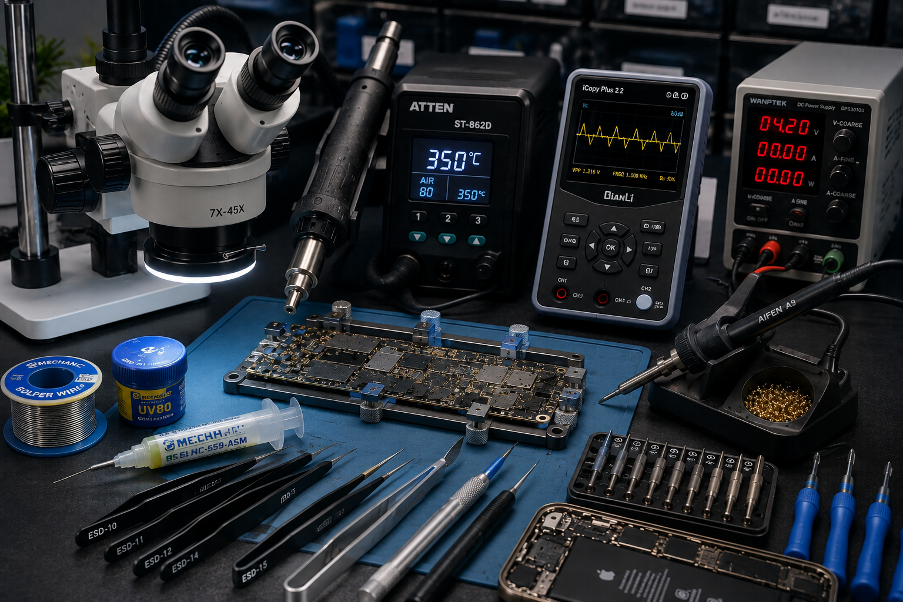
Using a Microscope for Phone Soldering allows technicians to clearly examine solder joints, identify damaged traces, inspect corrosion, and accurately position replacement components. High-quality magnification reduces mistakes while making delicate soldering work much easier.
A professional microscope also improves posture and reduces eye strain during long repair sessions, allowing technicians to maintain consistent repair quality throughout the day.
Choosing the Right Hot Air Station
Many motherboard repairs involve removing integrated circuits without damaging nearby components. This requires a hot-air rework station that provides accurate temperature control and adjustable airflow.
The ATTEN ST-862D hot air station has become a popular choice among repair professionals because of its fast heating performance, stable temperature output, and precise airflow adjustment. These features help technicians safely remove and replace IC chips while minimizing the risk of overheating sensitive components.
A reliable hot air station also shortens repair time and improves consistency, making it an important investment for anyone performing advanced smartphone repairs.
Accurate Diagnosis Saves Time and Money
Replacing components without first identifying the actual fault often leads to unnecessary work and additional costs. Professional technicians always begin by diagnosing the motherboard before attempting any repairs.
A Phone PCB Fault Diagnosis Tool helps locate short circuits, damaged power rails, faulty components, and voltage irregularities with greater accuracy. Instead of relying on guesswork, technicians can quickly identify the root cause of a problem and focus on the necessary repair.
Accurate diagnostics not only improve repair success rates but also increase customer confidence by ensuring that only defective components are replaced.
Other Essential Micro-Soldering Equipment
While microscopes, hot air stations, and diagnostic tools form the core of any repair workstation, several additional tools are equally important for achieving professional results.
A precision soldering iron with stable temperature control is essential for replacing connectors, jumper wires, and small components. Fine solder wire and high-quality flux help create clean and reliable solder joints while reducing oxidation.
Precision anti-static tweezers allow technicians to safely position tiny components during repairs, while a PCB holder keeps the logic board stable throughout the soldering process. A laboratory DC power supply is also valuable for analyzing current consumption and identifying hidden motherboard faults before repairs begin.
Together, these tools create a complete workstation capable of handling even the most complex motherboard repairs.
Common Motherboard Repairs That Require Micro-Soldering
Professional repair shops perform a wide variety of chip-level repairs every day. Charging issues are often caused by damaged charging ICs or connector circuits, while audio problems may require replacing the audio IC. Water-damaged devices frequently need corrosion removal, trace repair, and component replacement before they become fully functional again.
Face ID repairs, Wi-Fi issues, and touch-related faults also require precise soldering techniques because of the extremely small components involved. Having the proper equipment allows technicians to complete these repairs with greater confidence and reliability.
As smartphones continue to become more advanced, demand for professional motherboard repair services continues to grow, making micro-soldering an increasingly valuable skill.
Tips for Building a Professional Repair Workstation
Creating an efficient repair workstation involves more than simply purchasing expensive equipment. Good lighting, proper ventilation, and electrostatic discharge (ESD) protection all contribute to safer and more accurate repairs.
Technicians should organize tools for easy access and regularly clean their work area to prevent contamination. Practicing on damaged or recycled logic boards is also an excellent way to improve soldering skills before working on customer devices.
Regular maintenance of soldering equipment, including cleaning tips and calibrating temperature settings, ensures consistent performance and extends the life of the tools.
Conclusion
Micro-soldering has become one of the most valuable skills in the smartphone repair industry, particularly for technicians specializing in iPhone motherboard repairs. As devices become smaller and more complex, success depends not only on technical knowledge but also on using professional equipment designed for precision work.
A quality microscope enhances visibility, a reliable hot air station ensures safe component removal, and accurate diagnostic equipment helps identify motherboard faults before repairs begin. Combined with proper soldering tools and a well-organized workstation, these investments enable technicians to deliver faster, safer, and more reliable repairs.
For repair professionals looking to expand their services and improve customer satisfaction, building a complete micro-soldering workstation is a smart long-term investment that supports both business growth and repair quality.
FAQs
- What is micro-soldering in smartphone repair?
Micro-soldering is the process of repairing or replacing tiny electronic components on a smartphone motherboard using specialized tools and precision techniques. - Why is a microscope important for motherboard repair?
A microscope provides the magnification needed to inspect small solder joints, align components accurately, and detect damage that cannot be seen with the naked eye. - What makes a professional hot air station different from a basic one?
Professional hot air stations provide stable temperature control, adjustable airflow, and consistent heating, reducing the risk of damaging sensitive motherboard components. - Why should technicians use PCB diagnostic tools?
Diagnostic tools help identify electrical faults, short circuits, and damaged components before repairs begin, saving both time and unnecessary replacement costs. - Can beginners learn micro-soldering?
Yes. With proper training, regular practice, and professional tools, beginners can gradually develop the skills required for successful motherboard repair.
