
Every day, millions of people walk into industrial facilities, laboratories, and manufacturing plants, ready to do their jobs. They focus on their tasks, deadlines, and project milestones. But underneath the daily hustle lies a silent, invisible reality: the air we breathe can change in an instant.
In environments that utilize cryogenic liquids, compressed gases, or chemical solvents, a single leak can compromise an entire room before anyone even notices. Nitrogen, argon, helium, and carbon dioxide are crucial for modern industry, but they are also master disguises. They have no color, no odor, and no taste. If they displace oxygen or build up to toxic levels, the consequences can be sudden and severe.
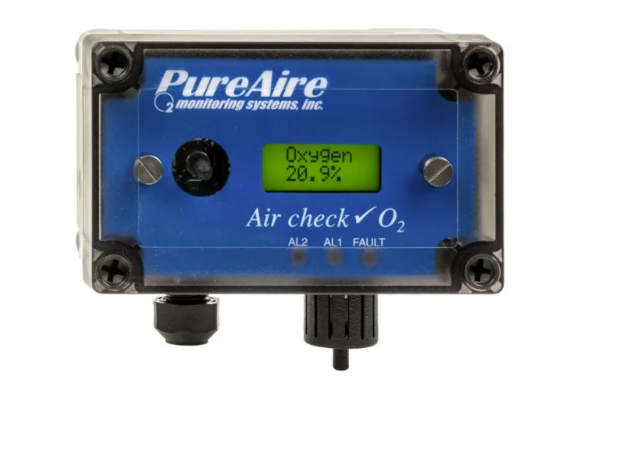
That is where specialized monitoring technology comes into play. Protecting a team requires more than just standard compliance checkboxes; it requires robust, foolproof detection systems that operate continuously without failing. Among the most trusted names in this space is PureAire, a manufacturer renowned for creating oxygen monitors and gas detectors that combine relentless reliability with remarkably low maintenance.
The Invisible Risk of Oxygen Depletion
To understand why specialized monitoring is so critical, it helps to look at how gas leaks behave in enclosed spaces. We all know we need oxygen to breathe, with normal atmospheric air sitting right around 20.9% oxygen. What many don’t realize is how narrow the margin of safety truly is.
When a gas like nitrogen or argon leaks from a storage tank or pipeline, it quickly expands. Because these gases are inert, they don’t cause a fiery explosion, but they do something just as dangerous: they push the oxygen out of the room.
-
At 19% Oxygen: The human body begins to experience subtle physiological changes, including impaired coordination and increased heart rate.
-
At 15% Oxygen: Decreased ability to work strenuously, coordination blunts, and headaches set in.
-
At 12% Oxygen: Respiration increases significantly, judgment becomes severely impaired, and lips turn blue.
-
Below 10% Oxygen: Mental failure, fainting, unconsciousness, and eventually asphyxiation occur within minutes.
Because the human body lacks a natural sensory mechanism to detect low oxygen levels—our brains register the buildup of carbon dioxide, not the absence of oxygen—a person walking into an oxygen-deficient room will simply feel tired or dizzy before losing consciousness. They won’t realize they are suffocating.
This specific hazard makes a continuous pureaire oxygen deficiency monitor a non-negotiable safety asset for facilities handling compressed or cryogenic gases.
Why PureAire Stands Out: The Zirconium Oxide Advantage
If you look across the gas detection industry, you will find plenty of monitors on the market. However, a major pain point for safety managers is the constant upkeep these systems usually demand. Traditional electrochemical sensors are prone to drifting, degrade rapidly over time, and require frequent calibration and replacement—often every one to two years.
PureAire changed the game by utilizing a specialized zirconium oxide sensor cell. This engineering choice fundamentally alters how a monitor performs over its lifespan.
1. A Decade of Non-Stop Performance
Unlike standard electrochemical sensors that dry out or get used up simply by being exposed to the air, zirconium oxide sensors operate on a different physical principle. They utilize a solid-state ceramic element that measures oxygen ions. This design allows PureAire monitors to operate continuously for 10 years or more under normal conditions without needing a sensor replacement.
2. Resistance to Environmental Factors
Traditional sensors are notoriously sensitive to shifts in weather and ambient conditions. If a room gets suddenly humid, changes temperature, or experiences a shift in barometric pressure, standard sensors can trigger a false alarm. A false alarm might sound trivial, but it causes “alarm fatigue.” When a siren goes off three times a week for no reason, employees start ignoring it—or worse, they unplug the monitor.
Because zirconium oxide is inherently stable, PureAire devices are virtually immune to these environmental fluctuations. They don’t drift when the weather changes, meaning when the alarm sounds, your team knows it’s a real emergency.
3. Freedom from Daily Maintenance
In a busy facility, safety managers have a million things to track. Checking, calibrating, and logging sensor data across dozens of rooms takes up valuable time. PureAire monitors are designed to be self-calibrating. Once installed, they adjust to ambient air conditions automatically, eliminating the need for monthly span gas calibrations.
Where Gas Monitoring is Essential
Hazardous gas accumulation and oxygen depletion aren’t limited to heavy industrial chemical plants. You will find these risks in surprising places, many of which are part of our essential daily economy.
Laboratories and Universities
Research labs frequently use liquid nitrogen for cryopreservation, argon for analytical equipment like ICP-MS systems, and helium for superconducting magnets in NMR spectrometers. Because these labs are often located in confined basement spaces or rooms with controlled ventilation, a leak can quickly turn critical.
Healthcare and MRI Suites
Hospitals rely heavily on gases. Medical air, oxygen, and nitrous oxide are piped through walls constantly. Furthermore, MRI machines utilize massive amounts of liquid helium to keep their superconducting magnets cool. If an MRI machine experiences a “quench”—a sudden boil-off of the cryogenic liquid—thousands of liters of helium gas are rapidly released into the room, creating an immediate asphyxiation hazard.
Food, Beverage, and Indoor Agriculture
The beverage industry uses massive quantities of carbon dioxide ($CO_2$) for carbonation, while modern indoor vertical farms use it to accelerate plant growth. At the same time, food packaging facilities use nitrogen gas flushing to displace oxygen in snack bags and containers to extend shelf life. Walk-in freezers, breweries, and packaging lines all require dedicated monitoring to keep workers safe from $CO_2$ toxicity and nitrogen-driven oxygen depletion.
Semiconductor and Advanced Manufacturing
Making silicon chips and high-tech electronics requires an array of specialized, highly toxic, and pyrophoric gases, alongside massive amounts of high-purity nitrogen for purging lines. These facilities require ultra-reliable, fast-responding detection networks that plug directly into facility management systems.
Navigating the PureAire Lineup: Finding the Right Solution
Every workspace has its own architectural quirks, environmental challenges, and specific gas hazards. PureAire builds its lineup to address these distinct needs with flexible, targeted hardware configurations.
| Monitor Type | Best Used For | Key Feature |
| Standard $O_2$ Deficiency Monitor | Labs, MRI suites, hospitals, and nitrogen storage areas. | Built-in local display, 10+ year sensor life, no calibration required. |
| Dual $O_2$ / $CO_2$ Monitor | Breweries, wineries, fast-food beverage areas, and indoor grows. | Tracks both oxygen depletion and carbon dioxide toxicity simultaneously. |
| Explosion-Proof Monitors | Chemical plants, oil & gas facilities, and hazardous locations. | Housed in heavy-duty, spark-resistant enclosures rated for Class 1, Div 1 areas. |
| Remote Digital Displays | Outside doorways, entry points, and control rooms. | Allows workers to check air safety levels before entering a sealed room. |
Smart Integration with Facility Systems
A safety monitor shouldn’t live on an island. PureAire systems come equipped with standard 4-20mA analog outputs and programmable relays. This means you can wire the monitors directly into your building’s automation system (BAS), fire alarm panel, or programmable logic controllers (PLCs).
If a leak occurs, the monitor doesn’t just flash a light; it can automatically turn on exhaust fans, open motorized dampers, shut off the main gas supply valves, and send an instant alert to the security desk.
Best Practices for Installing and Maintaining Your System
Buying a top-tier monitor is only half the battle; placing and maintaining it correctly ensures it actually protects your people when things go wrong.
Placement Matters: Heavy vs. Light Gases
Where you mount a gas detector depends entirely on the gas you are trying to catch. Gases don’t all behave the same way; their molecular weight dictates whether they rise to the ceiling or puddle on the floor.
-
Nitrogen and Oxygen: Nitrogen has a molecular weight very close to ambient air. For general oxygen depletion monitoring, devices should typically be mounted at “breathing zone” height—roughly 3 to 5 feet off the ground.
-
Carbon Dioxide ($CO_2$) and Argon: These gases are significantly heavier than air. If an argon tank leaks, the gas sinks to the floor and fills the room from the bottom up like water. Monitors for heavy gases should be placed low to the ground, around 12 to 18 inches off the floor.
-
Helium and Hydrogen: These are incredibly light gases that rise instantly. Monitoring for helium leaks requires sensors placed high up, near the ceiling or above the specific equipment joints.
Use Remote Displays for Locked Rooms
One of the most common workplace accidents happens when an employee walks into a storage room or walk-in cooler, collapses due to a gas leak, and a second employee rushes in to save them—only to collapse as well.
To prevent this tragic domino effect, always install a remote digital display outside the entrance door. This simple step allows your team to verify that the oxygen levels inside are safe before they ever turn the doorknob.
Creating a Culture of True Workplace Safety
At the end of the day, investing in high-quality gas detection hardware is about peace of mind. It allows business owners, facility managers, and safety directors to rest easy, knowing that their teams are guarded by technology that doesn’t sleep, doesn’t drift, and doesn’t demand constant maintenance.
By choosing robust solutions like PureAire’s zirconium oxide systems, you remove the guesswork from environmental safety. You protect your workforce from invisible hazards, keep your facility compliant with OSHA and local regulations, and build a workplace environment where safety isn’t an afterthought—it’s a foundational promise. Ensure your facility is truly protected by evaluating your gas storage setups, identifying potential vulnerabilities, and putting the right detection safeguards in place today.
